What “Biodegradable” Means in Industrial Cleaning

September 10, 2026

The word “biodegradable” appears on many cleaning products, but it can be misunderstood. In industrial cleaning, the term generally refers to ingredients that can be broken down by microorganisms over time under suitable environmental conditions.


That does not automatically mean a product is harmless, safe for every surface, or appropriate to discharge anywhere. For facility managers, maintenance teams, manufacturers, and repair operations, biodegradable cleaning products should be evaluated based on both environmental considerations and actual cleaning performance.
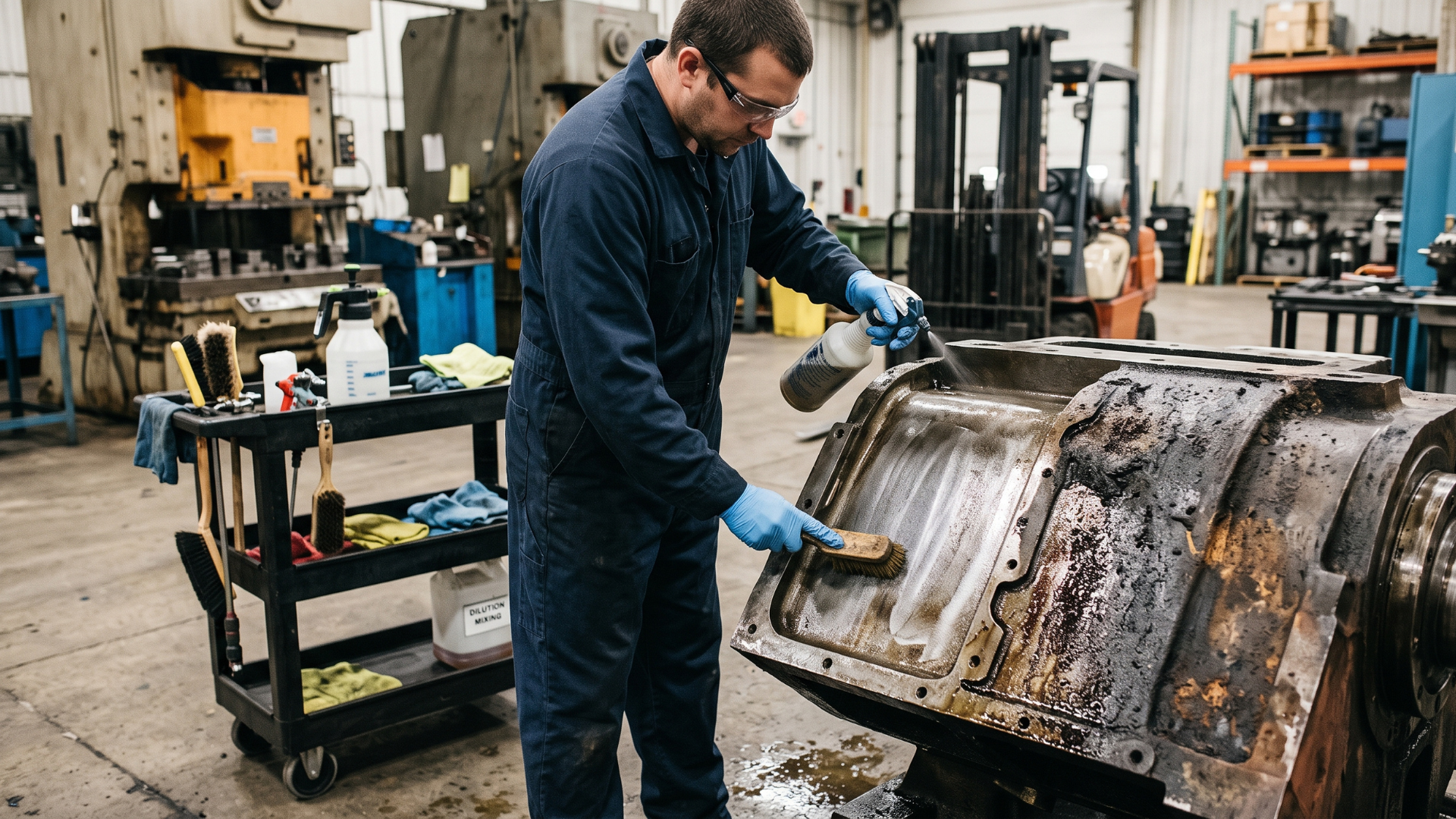
Worker in blue gloves inspects a dirty industrial machine part in a workshop.

Biodegradable Does Not Mean Instant Breakdown

A biodegradable ingredient does not disappear the moment it is rinsed away.


Breakdown occurs over time as microorganisms act on the material. The rate can vary depending on temperature, oxygen, moisture, microbial activity, concentration, and other environmental conditions.


This distinction matters because industrial cleaning often involves much larger volumes and heavier contaminants than ordinary household cleaning.


A biodegradable degreaser may still need to be handled, stored, diluted, and disposed of according to product instructions and applicable regulations.
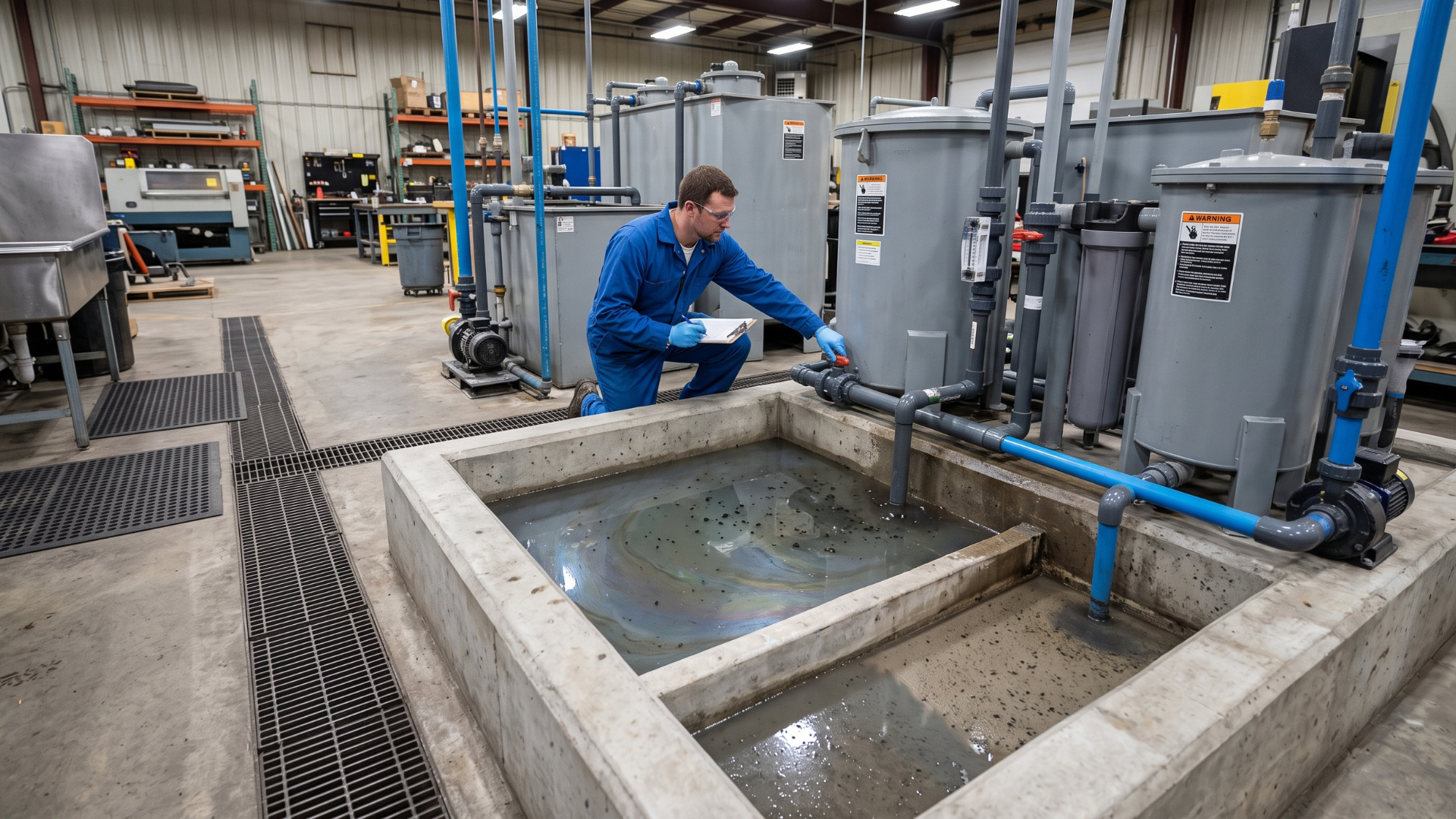
Worker in blue uniform inspecting industrial equipment beside a concrete basin in a factory.

The Soil Being Removed Still Matters

Even when the cleaner itself contains biodegradable ingredients, the material being removed may not be environmentally benign.


Oil, grease, metal residues, fuel, paint, and other industrial contaminants can remain in the wastewater after cleaning.


That means the environmental impact of an industrial cleaning process depends on more than the formulation of the cleaning product.


Facilities should consider where the wastewater goes, what contaminants it contains, and whether collection or treatment is required before disposal.


Using a biodegradable cleaner does not make petroleum residues or other contaminants biodegradable by association.
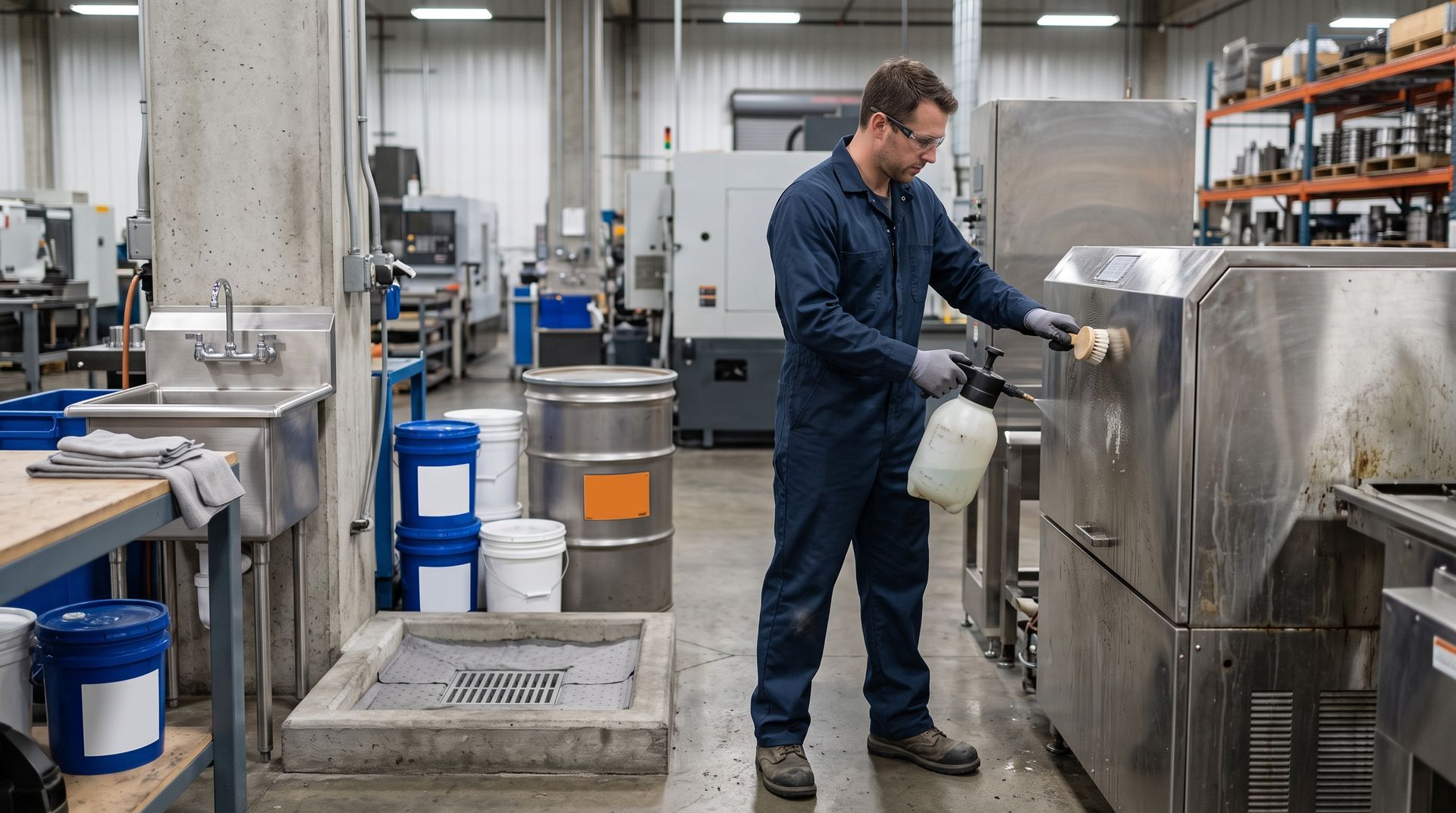
Worker in blue coveralls operating stainless steel machinery in an industrial workshop.

Performance Still Has to Come First

A cleaner must still do the job it is designed to perform.


If a product cannot remove the grease, oil, carbon, or other soil present, workers may compensate by using more chemicals, repeating the cleaning process, increasing water consumption, or spending additional labor time on the same task.


A more sustainable cleaning program therefore depends on efficiency as well as formulation.


The right cleaner should match the soil, surface, application method, concentration, and temperature being used.


In many cases, using an appropriately selected concentrated cleaner at the proper dilution can reduce both product waste and unnecessary packaging.
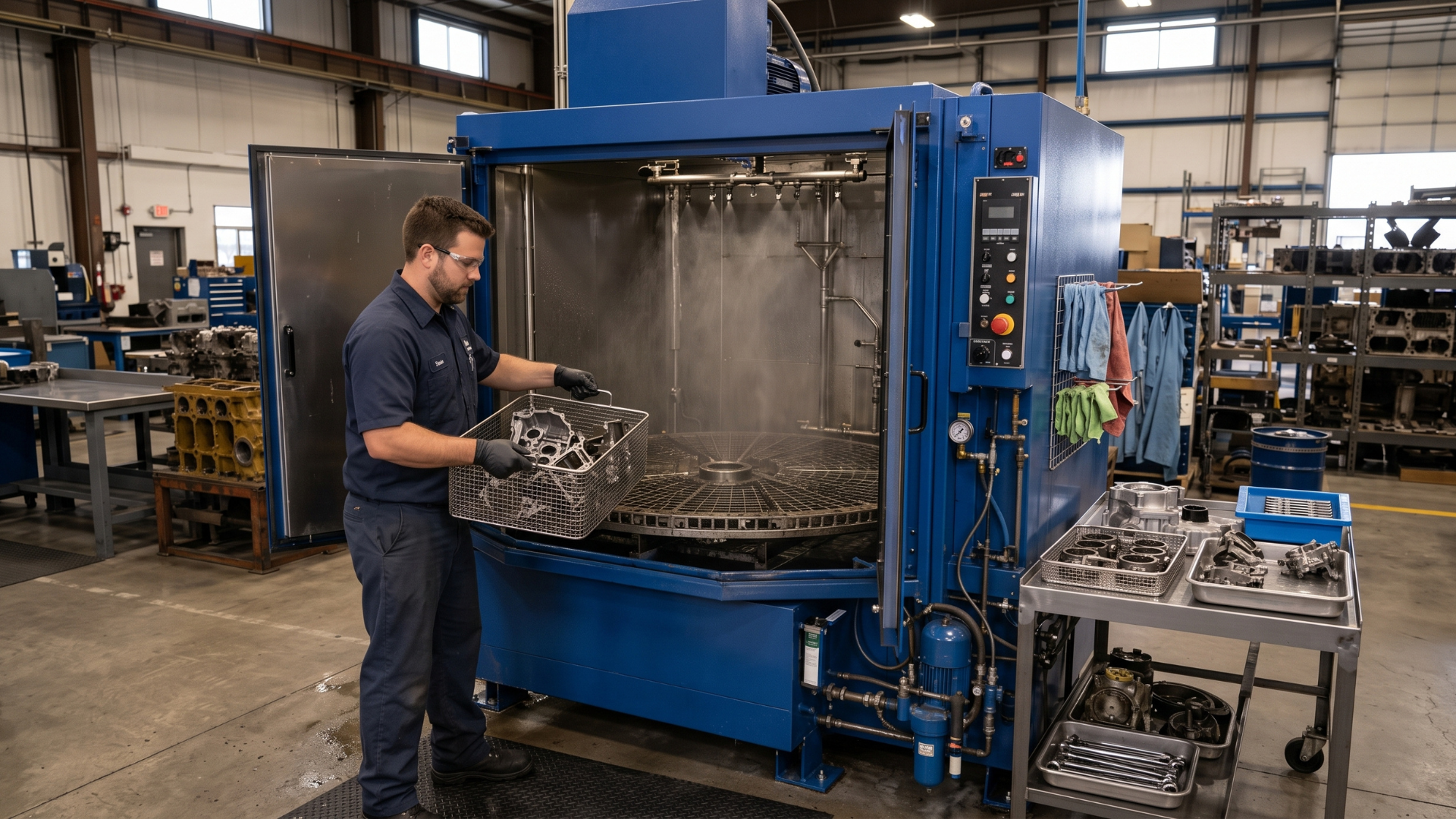
Worker loading metal parts into a large blue industrial machine in a workshop

Biodegradability Is Only One Environmental Factor

Environmental performance cannot be reduced to a single label.


Facility managers may also want to consider factors such as VOC content, packaging volume, concentration, transportation efficiency, water usage, worker exposure requirements, and whether the cleaning process replaces more solvent-intensive methods.


For example, an aqueous degreasing program may help reduce reliance on certain traditional solvent-cleaning processes, depending on the application.


Reusable parts-washing systems can also reduce the need for disposable wipes, aerosol cleaners, and repeated manual cleaning in some operations.


The goal should be to look at the entire cleaning process rather than one marketing term.
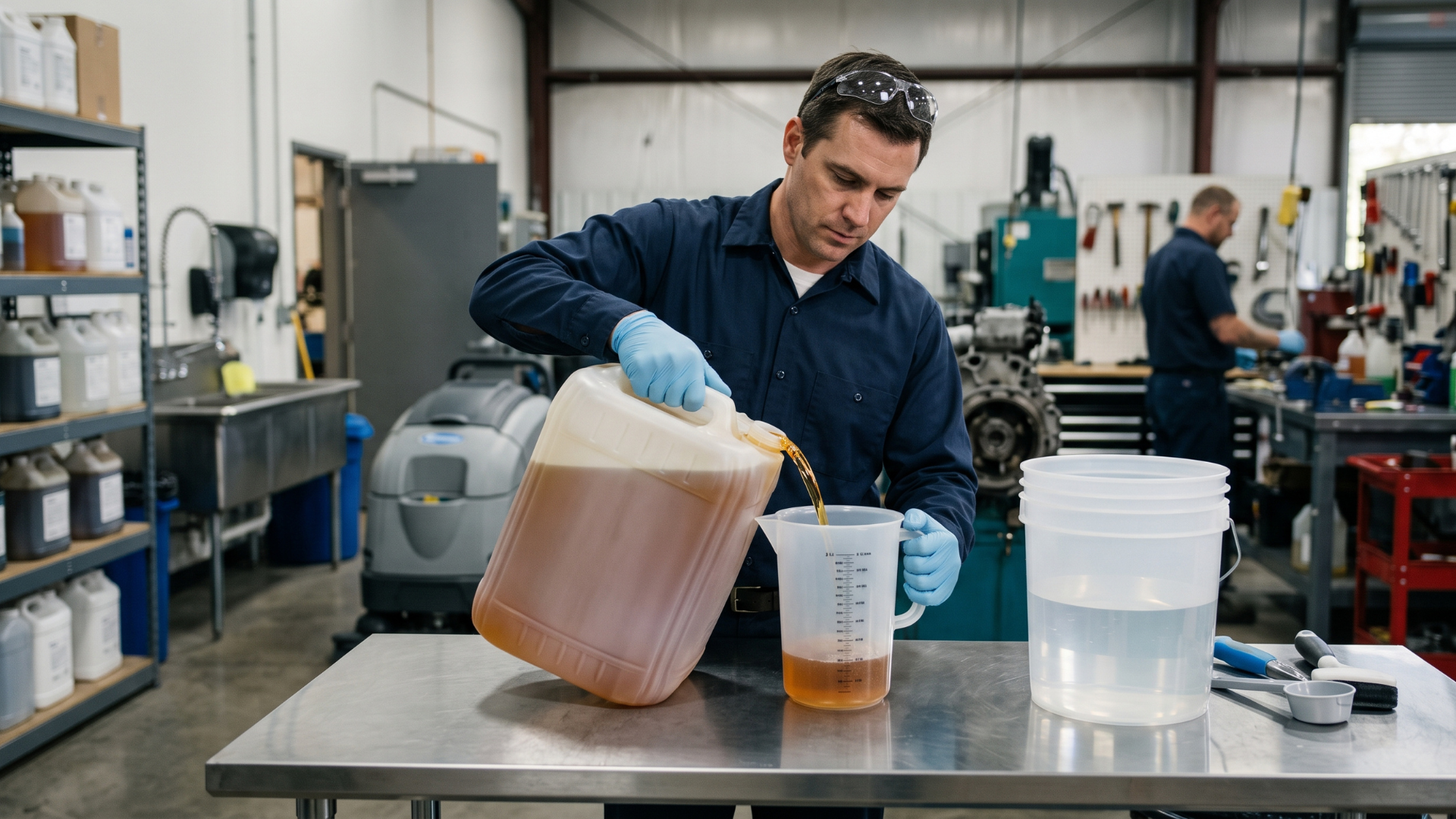
Worker pouring brown liquid from a jug into a measuring cup in a lab or workshop setting

Proper Dilution Can Reduce Waste

Using too much cleaner does not necessarily improve cleaning.


In fact, excessive concentration can waste product, increase residue, complicate rinsing, and raise operating costs.


Following the recommended dilution ratio helps facilities use only the amount of chemical needed for the task.


This is especially important with concentrated industrial cleaners. A single container may produce a large amount of usable cleaning solution when mixed correctly, which can reduce packaging and storage demands compared with repeatedly purchasing ready-to-use products.
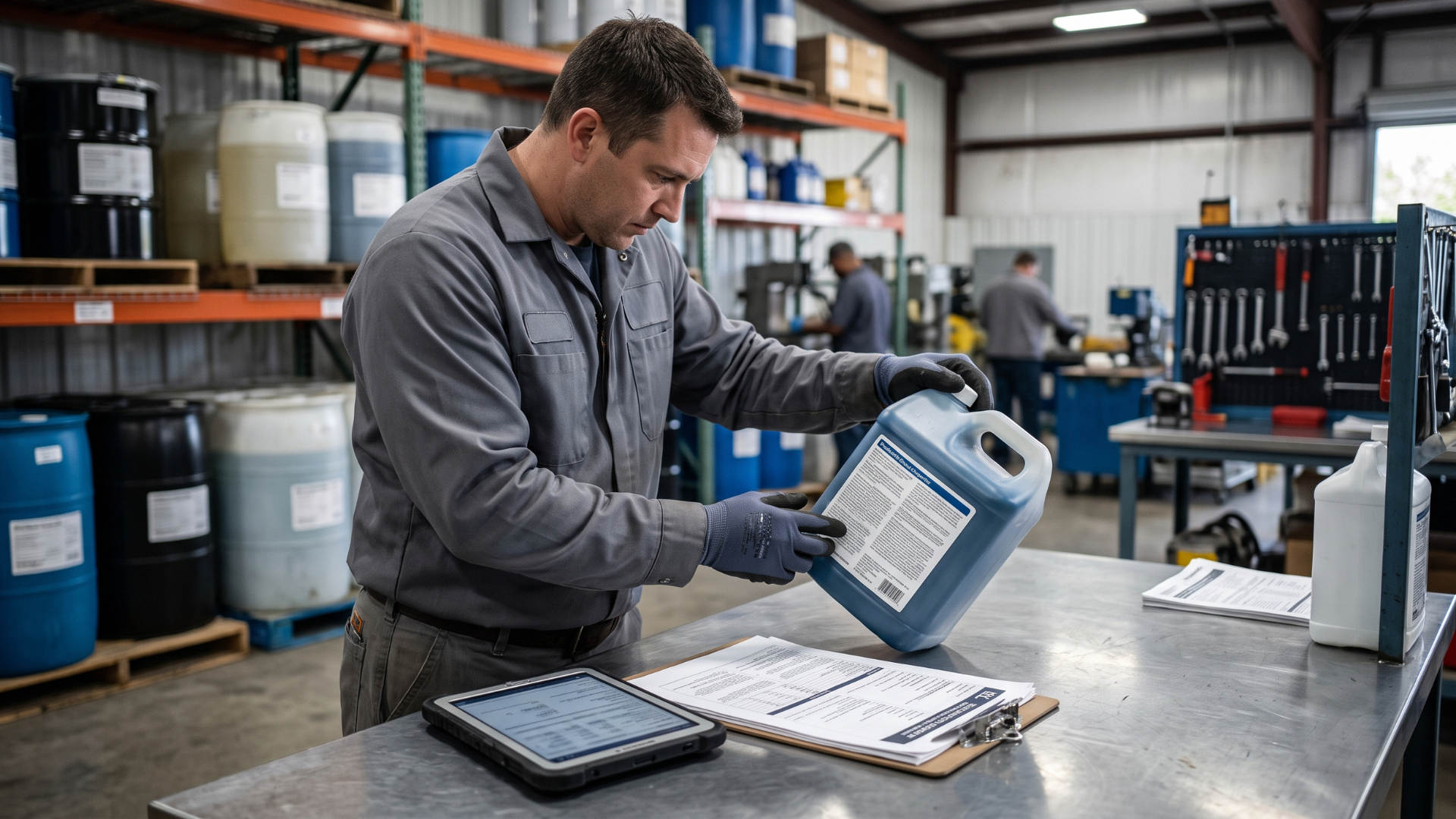
Worker in a warehouse pours liquid from a blue jug into a container at a workbench.

Read the Product Information Carefully

Product labels, technical data sheets, and Safety Data Sheets provide important information about handling and use.


Facility managers should review:

  • Recommended dilution ratios
  • Surface compatibility
  • PPE requirements
  • Storage conditions
  • Disposal guidance
  • Application methods
  • Relevant environmental claims


No cleaner should be selected based solely on the word “biodegradable.” The product still has to be appropriate for the job and compatible with the facility’s safety and environmental procedures.
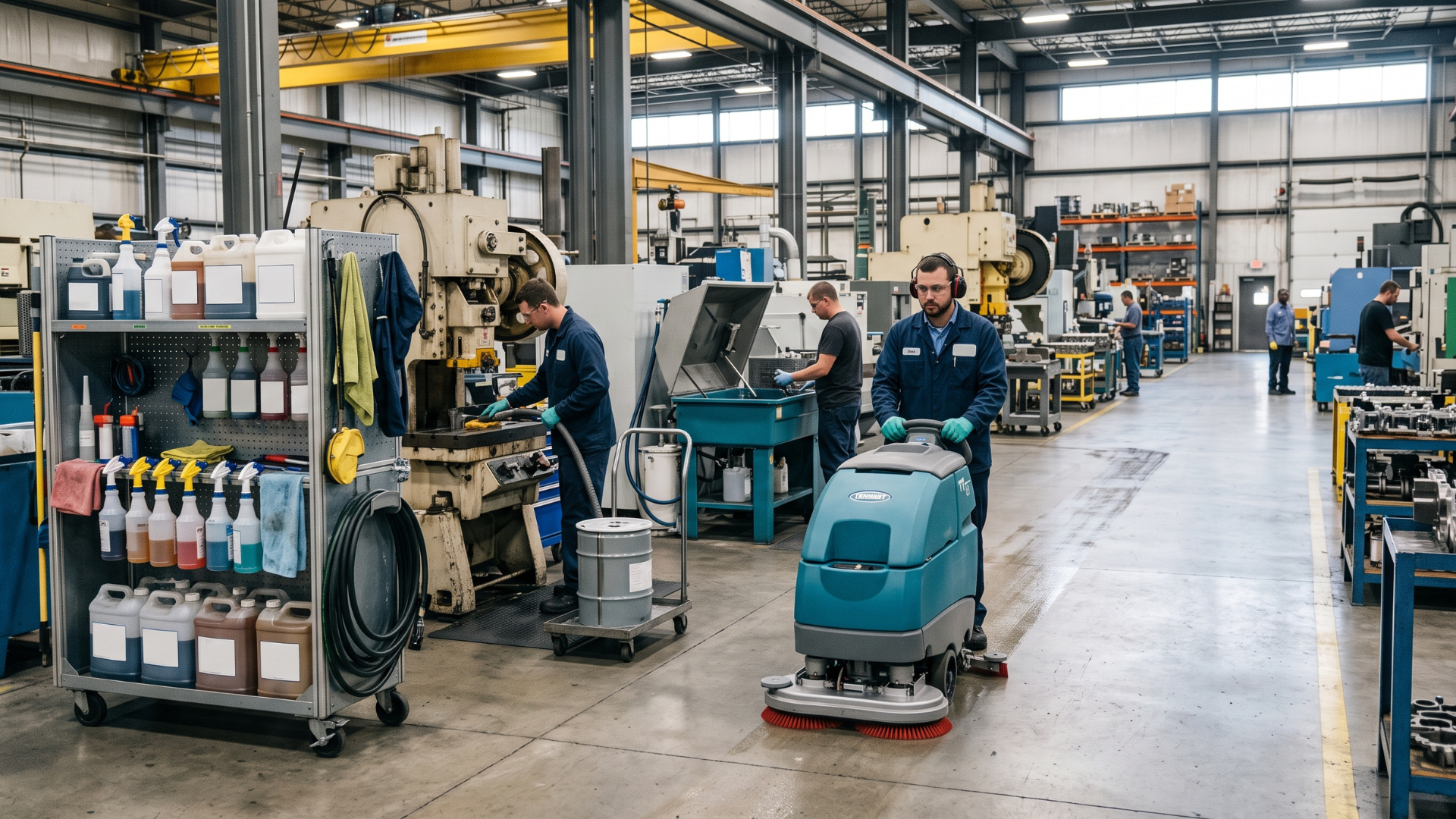
Factory floor with workers using blue floor scrubbers among metal equipment and shelves

Build a Smarter Industrial Cleaning Program

Biodegradable industrial cleaners can be part of a more environmentally conscious cleaning strategy, but the term should be understood in context.


The best results come from choosing the right chemistry, using the proper dilution, reducing unnecessary waste, and matching the cleaning method to the actual soil and surface.


Green Power Chemical supplies industrial cleaners, degreasers, and parts-washing solutions designed for demanding commercial and industrial environments. From heavy grease removal and floor cleaning to aqueous parts washing and specialized facility applications, Green Power Chemical can help businesses evaluate products based on performance, safety, efficiency, and environmental considerations.


If your facility is looking for a more effective and responsible industrial cleaning program, contact Green Power Chemical to discuss cleaning products and equipment matched to your operation.

You can contact us by phone at 800-932-9371, by emailing us at peter@greenpowerchemical.com, or through the contact form here on our site.
September 3, 2026
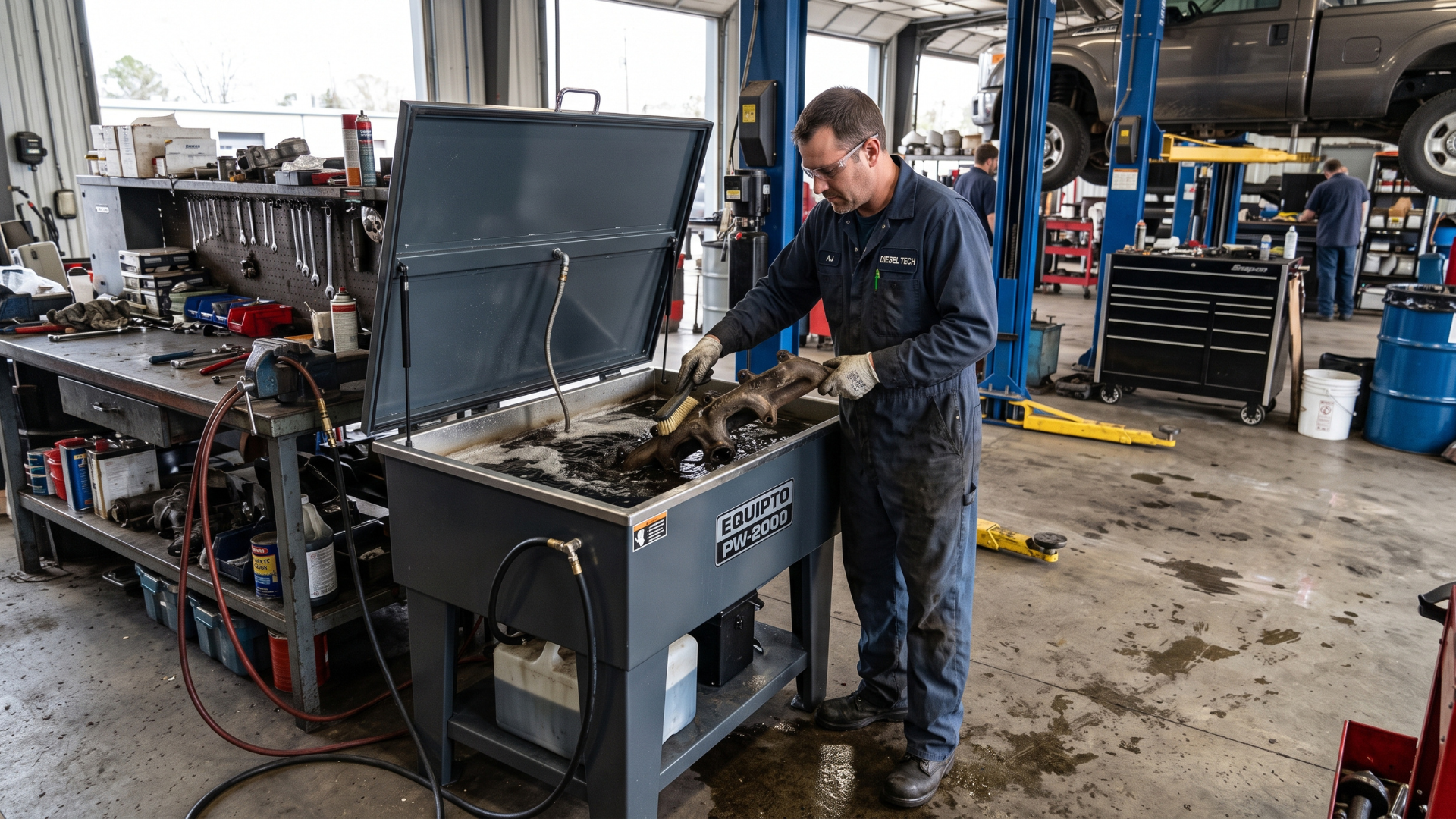
Cleaning parts by hand may work when a shop only handles occasional repairs. As workload increases, however, manual cleaning can become slow, inconsistent, and difficult to manage.  A dedicated parts washer can help automotive shops, diesel repair facilities, machine shops, manufacturers, and maintenance departments handle contaminated components more efficiently. The right time to invest often comes down to volume, labor, contamination levels, consistency, and the types of parts being cleaned.
August 26, 2026
Industrial and commercial cleaning products have to do more than remove grease, grime, oils, and other difficult soils. Facility managers also need to consider how those products affect workers, indoor air quality, storage practices, environmental goals, and day-to-day operations.  One factor that often comes up during product selection is VOC content. VOCs, or volatile organic compounds, are chemicals that can evaporate into the air during product use. Understanding what they are and why they matter can help facilities make more informed decisions when selecting cleaners and degreasers.
August 19, 2026
Industrial cleaning is essential for keeping equipment, floors, work areas, and production environments functioning properly. At the same time, the products and processes used for cleaning can affect worker exposure, waste generation, packaging, water use, and overall environmental impact.  A more sustainable industrial cleaning program does not mean sacrificing performance. It means choosing products and procedures that are effective for the job while also reducing unnecessary chemical use and waste. Green Power Chemical provides industrial cleaners, degreasers, and parts-washing solutions designed to help facilities balance cleaning performance with safety and sustainability goals.
August 12, 2026
For years, industrial cleaning was often associated with harsh solvents, strong fumes, and aggressive chemical formulations. That created a common assumption: if a cleaner is environmentally responsible, it must be less effective. Modern industrial chemistry has changed that equation. Today, many green cleaning products are formulated specifically to remove grease, oil, carbon deposits, food residue, and other difficult soils without relying on some of the more hazardous ingredients traditionally used in heavy-duty cleaning.  Green Power Chemical develops environmentally responsible industrial cleaners and degreasers designed for demanding commercial and industrial applications. These products are used in environments such as manufacturing facilities, warehouses, machine shops, restaurants, municipal operations, and aerospace settings where cleaning performance is essential.
August 6, 2026
Clean public spaces contribute to safer communities, protect valuable infrastructure, and leave a positive impression on residents and visitors alike. From municipal buildings and public works facilities to parks, transit centers, and maintenance garages, government agencies and facility managers rely on effective cleaning products to keep these environments functional and well maintained. Increasingly, there is also a growing emphasis on selecting products that deliver strong cleaning performance while supporting environmental responsibility.  Green Power Chemical develops environmentally responsible industrial cleaning products that help organizations maintain clean facilities and equipment without compromising on performance. By choosing advanced green cleaning solutions, municipalities, contractors, and commercial facilities can support both operational efficiency and sustainability goals.
July 29, 2026
Keeping equipment clean is about much more than appearance. In manufacturing plants, aerospace facilities, heavy equipment shops, automotive repair centers, and industrial maintenance departments, clean components contribute to accurate inspections, efficient repairs, and dependable equipment performance. As grease, oil, carbon deposits, machining fluids, and other contaminants accumulate, routine maintenance becomes more difficult and the risk of overlooking wear or damage increases.  CUDA Parts Washers provide an efficient solution for businesses that routinely clean mechanical components. Designed for demanding industrial environments, these machines combine powerful cleaning performance with user-friendly operation, helping organizations improve productivity while supporting high standards of cleanliness throughout their maintenance operations.
July 22, 2026
In manufacturing and industrial operations, every minute of unplanned downtime has the potential to affect productivity, delivery schedules, labor efficiency, and profitability. While equipment failures are often associated with worn components or mechanical issues, contamination from grease, oil, dirt, carbon buildup, and industrial residue can also interfere with machinery performance over time.  Implementing a scheduled industrial cleaning program is one of the most effective ways to help keep equipment operating efficiently while creating a cleaner, safer work environment for employees.
July 15, 2026
Sustainability has become an important consideration for organizations of every size. Whether managing a manufacturing plant, warehouse, commercial kitchen, aerospace facility, or municipal property, businesses are increasingly looking for ways to reduce their environmental impact while maintaining high operational standards.  One area that is often overlooked is facility maintenance. The cleaning products and maintenance practices used every day can play an important role in supporting broader sustainability initiatives without sacrificing cleaning performance. At Green Power Chemical, we believe that environmentally responsible cleaning solutions can help organizations maintain cleaner facilities while contributing to long-term sustainability goals.
July 8, 2026
Environmental, Social, and Governance ( ESG ) initiatives have become an important consideration for organizations across many industries. Manufacturers, warehouses, municipalities, restaurants, and commercial facilities are increasingly evaluating how their daily operations affect the environment while looking for practical ways to reduce their overall impact.  While discussions about sustainability often focus on energy consumption or waste reduction, one operational area that is sometimes overlooked is the selection of cleaning products. Choosing environmentally responsible cleaners and degreasers can play a meaningful role in supporting broader ESG objectives while maintaining the high standards of cleanliness and performance businesses require.
July 1, 2026
In the aerospace industry , precision is essential. Every component, from large structural assemblies to small machined parts, is manufactured to exacting specifications. Because these parts often operate in demanding environments, maintaining their quality throughout the manufacturing and assembly process is critical. One important—but sometimes overlooked—part of that process is precision cleaning .  Before components move to the next stage of manufacturing, assembly, coating, inspection, or installation, they often need to be thoroughly cleaned to remove oils, machining fluids, grease, and other residues. Precision cleaning helps manufacturers maintain consistent quality while supporting the performance of aerospace components.